

Vision Care Knowledge & ExpertiseVol. 5
1
20/200
Q&A
Knowing when to refer a cataract patient and how to manage the transition can make the difference between a seamless surgical experience and a frustrating one. This article examines the critical decision points that determine optimal referral timing and explores best practices for maintaining continuity of care throughout the surgical process. Industry experts share their strategies for building strong comanagement relationships that benefit both practitioners and patients.

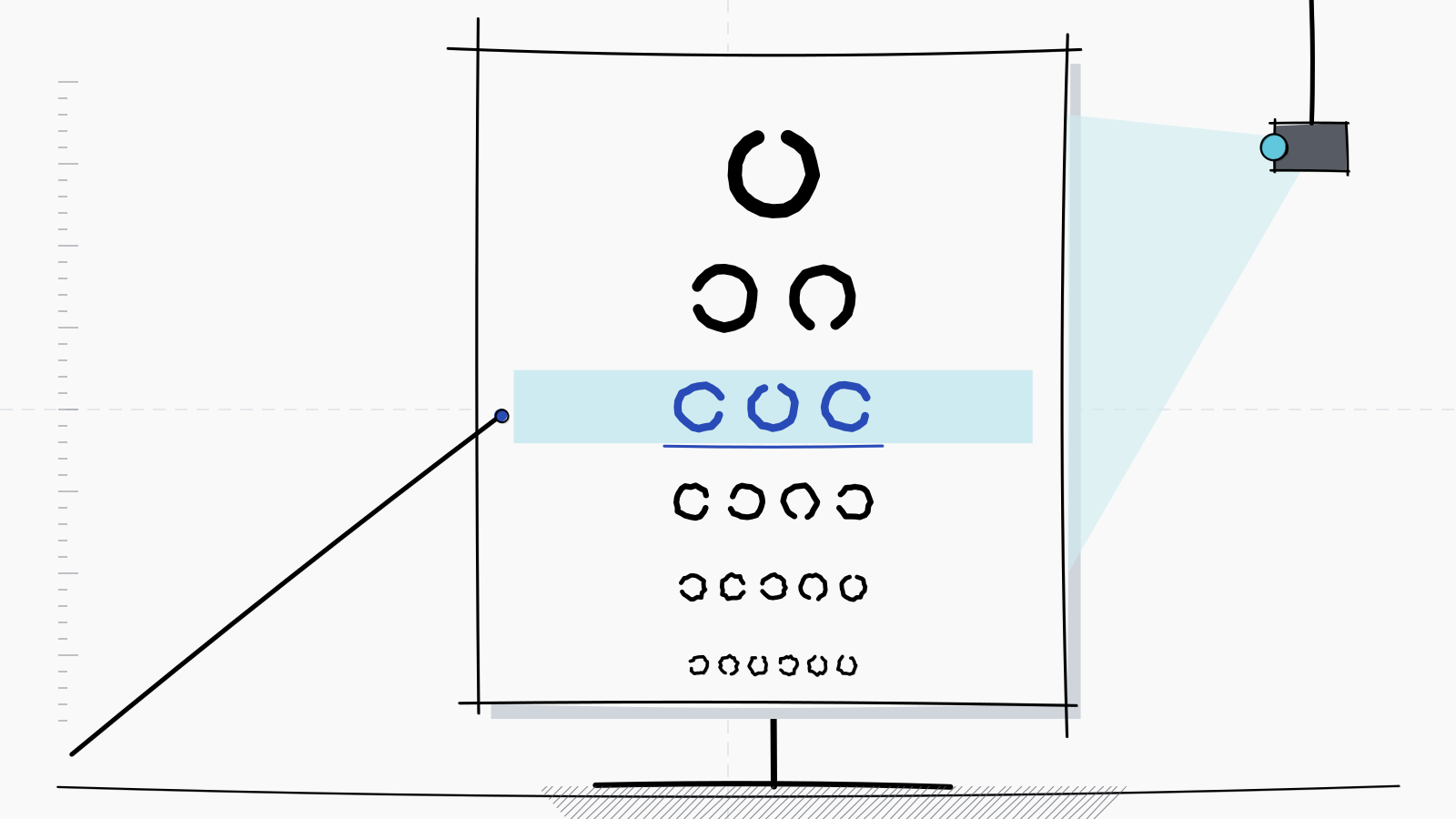
1 read this chart
Sharon HengConsultant Ophthalmic SurgeonDr. Sharon HengThe decision is based on function, not the grading chart. I have seen patients who appear to be mild or OK on a chart, but whose night driving has already become unsafe. At each visit, I ask one question to my patients whether their daily life becomes more difficult. Many times, visual acuity charts don't capture that fight and that's why I consider it as important as the grading. Most studies correlate delayed referral with increased fall risk in older patients, and that is what my call is based on.
This applies to the handoff as well. The way I present the referral will determine if the patient is calm or anxious when they come in for surgery. I explain to them that this is the same team and the surgeon will know what we spoke about today and not have to begin again. One line can make a difference in the entire conversation. Following the consult, I do a brief written summary so nothing is lost between consults. Many times, I am told that the letter has more impact than the appointment because they can share it with family and read it when they are feeling more steady.
Referral timing improves when glare disability is measured with validated tools instead of relying on visual acuity alone. Contrast sensitivity and standardized glare testing can reveal functional harm that a Snellen chart misses. Consistent thresholds and repeatable methods show progression and support medical necessity.
Clear documentation of night driving problems and daily task limits adds weight to the data. Sharing these results with the surgeon guides a timely and confident handoff. Start a glare testing protocol with defined referral cutoffs today.
Continuity grows when the postoperative plan is set before the surgery date. Prebooking day one, week one, and month one visits reassures patients and reduces no shows. A simple script that explains who will see the patient and when limits confusion.
Shared instructions for red flags and after hours contact improve safety and trust. Clear documentation also helps billing match the care plan. Build a co management calendar template and start scheduling these visits in advance today.
Clear corneas lead to better biometry and fewer surprises after surgery. Identifying and treating dry eye, lid disease, and inflammation before referral improves measurement stability. Short courses of targeted therapy can steady the tear film and sharpen keratometry.
Rechecking the surface after treatment confirms readiness and helps the surgeon select the right plan. Patients also feel prepared when they understand why surface care matters. Begin routine ocular surface screening and stabilization before sending the referral.
Better outcomes come when lens selection reflects how the patient lives each day. A guided talk about work tasks, night driving, reading needs, and hobbies reveals what vision ranges matter most. Simple explanations of options, trade offs, and costs build trust and set real expectations.
Simulated viewing or trial lenses can help patients picture their new focus. Documenting goals and tolerance for glare or glasses use keeps everyone on the same page. Hold a structured lifestyle and IOL counseling session before referral to align the plan with patient goals.
A smooth handoff depends on consistent information getting to the surgeon every time. A shared electronic record with structured fields reduces gaps and speeds review. A short checklist for targets, measurements, ocular history, and medications prevents last minute calls.
Secure messaging and clear time frames keep both teams aligned and accountable. Tracking handoff errors and fixing root causes makes the process stronger over time. Create a standard handoff checklist and enable shared EMR access as your next step.
3
20/70
Q&A · Optometry Magazine · July 28, 2026
Q&A · Optometry Magazine · July 27, 2026
Q&A · Optometry Magazine · July 7, 2026
Q&A · Optometry Magazine · October 19, 2026